
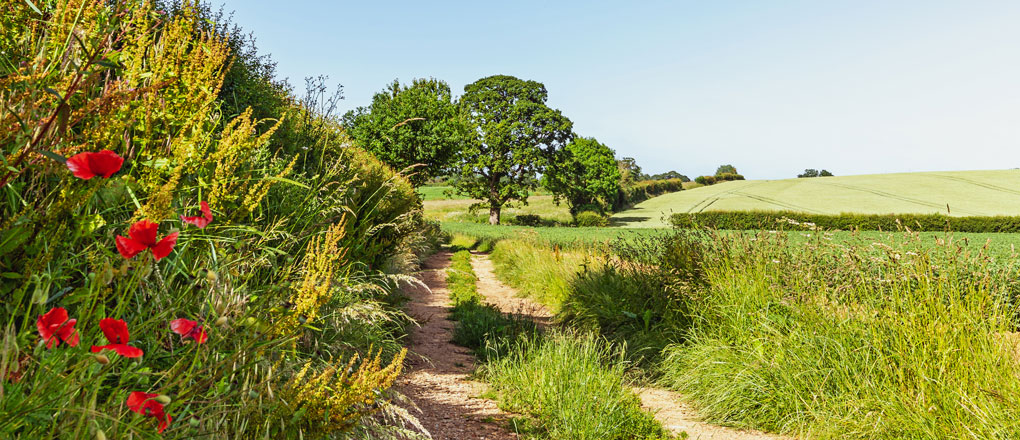
Hedgerow Survey
Quants Environmental is able to undertake Hedgerow Surveys in accordance with Hedgerow Regulations survey methodology.
It is against the law to remove or destroy certain hedgerows without permission from the Local Planning Authority.
Important non-domestic hedgerows are protected from removal by the Hedgerows Regulations 1997. In addition, protection and management practices have been established by the Management of Hedgerows (England) Regulations 2024. Various criteria given in the regulations are used to identify important hedgerows for wildlife, landscape or historical reasons.
Hedgerow Survey
The main reasons for surveying a hedgerow fall into three main categories:
- Conservation and Biodiversity
- Management and Restoration
- Planning and Legal Compliance
In many cases, a survey is a requirement for a planning application. Developers must determine if a hedge is ecologically or historically important under the Hedgerow Regulations. The survey ensures that any development avoids damaging protected, high-value, or ancient hedgerows.
The optimal time for a hedgerow survey is mid-April to August, when leaves and flowers are present, making it much easier to identify woody plant species. The survey usually focuses on a representative 30-metre section of the hedge and data is recorded about the hedge’s structure, its connectivity to other hedges and habitats, health indicators and features, and identification of the woody species present.
Nesting Bird Checks
On occasion, small sections of hedgerow can be removed under the direct supervision of a Suitably Qualified Ecologist (SQE), once a Nesting Bird Check (NBC) has been undertaken and shown to be negative. A Nesting Bird Check is valid for a period of between 24 – 48 hours, depending on the state of emergent leaves within the hedgerow. The more cover there is for nesting birds, the shorter the validation period. This can only be determined by the SQE following a site visit as it is dependent upon multiple environmental factors.
There is also a ban on cutting hedgerows on agricultural land from 1st March to 31st August, to protect nesting birds. Again, a Nesting Bird Check is required prior to any disturbance or removal. Ideally, trimming of hedgerows should be carried out in autumn or late winter, before bird nesting begins.
Browse Ecology Services
The Hedgerow Habitat
Hedgerows provide food and shelter for a variety of wildlife and have far more value in a landscape than a fence. They are a Priority Habitat under the UK Biodiversity Action Plan (BAP), and therefore their protection and/or replacement with regard to potential loss or damage in relation to development could be raised as a material planning consideration.
Hedgerows may have taken many centuries to develop their current ecological and landscape value, so the retention of this feature within the development is the most desirable option.
Almost without exception, hedgerows will provide cover for nesting birds, and there is no licence available to damage, destroy or disturb any bird, once nesting has begun. Therefore, it is important to plan ahead and involve your Ecologist at the earliest opportunity.
You need to find out if a hedgerow on your site qualifies as ‘Important’ under the Hedgerows Regulations.
For the regulations to apply a hedgerow must have a minimum length of 20m (less if it adjoins another hedge at each end), be less than 5m wide and have an age in excess of 30 years. It must also contain certain woody species.
Before removing a hedgerow, landowners must submit a hedgerow removal notice to the Local Planning Authority. The Local Authority has the power to issue a retention notice on important hedgerows if it is not satisfied that circumstances justify their removal.